Virginia Flood Insurance Requirements: When You Need It, What It Costs, and How to Check Your Flood Zone
Riskado
Virginia does not require every homeowner, renter or business to carry flood insurance. The requirement usually comes from a mortgage: a federally backed loan generally requires flood insurance when the building securing it is in a FEMA Special Flood Hazard Area (SFHA) and the community participates in the National Flood Insurance Program (NFIP), and your lender makes that property-specific determination. Standard Virginia homeowners, renters and commercial policies generally do not cover flood damage, according to the Virginia Bureau of Insurance (opens in a new tab). Check the address on FEMA's Flood Map Service Center (opens in a new tab), ask your lender for its flood determination, and read the NFIP limits, exclusions and waiting period on FloodSmart (opens in a new tab) before you rely on coverage.
Key takeaways
- No blanket mandateVirginia does not require every homeowner, renter or business to carry flood insurance.
- Lender requirementA federally backed mortgage generally requires it when the building is in a FEMA SFHA and the community participates in the NFIP.
- Who decidesYour lender makes the property-specific flood determination.
- Standard policiesVirginia homeowners, renters and commercial policies generally do not cover flood damage.
- First stepsCheck the address on FEMA's Flood Map Service Center and ask your lender for its flood determination.
Does Virginia require flood insurance?
Not for every property. Three kinds of requirement get mixed together, and it helps to separate them. Virginia law sets no blanket flood insurance mandate for owners, renters or businesses. A lender can make flood insurance a loan condition, and for a qualifying federally backed mortgage on a building in an SFHA, it generally must. Everywhere else, flood coverage is optional.
Optional does not mean the risk is zero. Virginia's statutory flood-risk disclosure form, set out in Virginia Code § 55.1-703 (opens in a new tab), states that properties outside an SFHA can still flood and that flood insurance may be worth considering even when a lender does not require it. Heavy rain, runoff and creek flooding reach inland and mountain properties as well as the coast.
Does homeowners or renters insurance cover flood in Virginia?
Generally, no. Homeowners policies generally do not cover flood damage, according to the Virginia homeowners insurance guide (opens in a new tab), and the Virginia renters insurance guide (opens in a new tab) lists flood as a typical exclusion that can be bought through a separate policy. Most homeowners and renters policies do not cover flooding, according to the Bureau's disaster readiness guidance (opens in a new tab), and commercial policies generally exclude it too.
The cause of the water matters. A covered plumbing event, a sewer backup, surface flooding and storm surge can each be treated differently, and your policy wording decides which one applies. Our guide to Virginia homeowners insurance covers the rest of a standard home policy, and Virginia renters insurance covers what a tenant's policy includes.
When a Virginia mortgage requires flood insurance
For a qualifying federally backed mortgage, the mandatory purchase rule generally applies when the building securing the loan is in an SFHA and the community participates in the NFIP, according to the NFIP Flood Insurance Manual (opens in a new tab). The lender reviews the current NFIP map, completes a Standard Flood Hazard Determination, and notifies you when flood insurance is a condition of the loan.
The version of § 55.1-703 (opens in a new tab) effective January 1, 2027 states it directly: the lender makes the purchase determination. A map zone you look up yourself is a starting point, not the final answer. The lender may also review the property again when the loan is sold on the secondary market or during a routine review of its mortgage portfolio, so ask for a copy of the determination and the map panel and date it used.
How to check a Virginia flood zone by address
Start with FEMA's Flood Map Service Center (opens in a new tab). Search the property address, open the current effective map, and save or print the result. Note the map panel, its effective date, the flood zone, and whether the map you are viewing is preliminary, pending or effective.
Virginia adds its own tools, and each one answers a different question:
- The Virginia Flood Risk Information System, run by the Department of Conservation and Recreation and named in § 55.1-703 (opens in a new tab) and § 55.1-1206 (opens in a new tab), shows flood-risk information for a property.
- Know Your Zone (opens in a new tab), from the Virginia Department of Emergency Management, shows hurricane evacuation zones in Hampton Roads, the Eastern Shore, the Northern Neck and the Middle Peninsula.
- The Virginia DEQ's environmental data map includes a FEMA National Flood Hazard Layer 2021 (opens in a new tab).
An evacuation zone or a planning layer is not a flood-zone determination. FEMA's effective Flood Insurance Rate Map is the one that controls mandatory purchase decisions. Maps also change: the flood-risk form in § 55.1-703 (opens in a new tab) states that FEMA is required to update flood maps every five years, and Hampton Roads planners continue to collect FEMA flood-risk data for the region (Hampton Roads coastal resources report (opens in a new tab)). Ask your locality or lender whether a map change is pending.

What Virginia home sellers must disclose about flood zones
The Virginia Residential Property Disclosure Act covers residential property of one to four dwelling units sold, exchanged, transferred by installment land-sales contract, or leased with an option to buy, under § 55.1-701 (opens in a new tab).
Under the version of § 55.1-703 (opens in a new tab) in effect until January 1, 2027, the disclosure statement includes a flood-risk form in which the owner makes no representation about whether the property is in an SFHA. The buyer is directed to do their own due diligence: review flood maps, contact FEMA or the NFIP, check Virginia's flood-risk information, and find out whether flood insurance is required. The version effective January 1, 2027 keeps that due-diligence disclosure and adds a reference to getting a flood certification or lender determination and visiting Virginia's Flood Risk Information website.
The disclosure must be given before the purchase contract is ratified, under § 55.1-709 (opens in a new tab). If it arrives after ratification, the buyer's termination rights are limited to the periods and events that section lists.
A flood-zone statement is not a statement that the house has never flooded. If you are buying, ask the seller for any records of past flooding and claims, and run the map checks yourself.
What Virginia landlords must tell renters about flood
When a lease does not require renters insurance, § 55.1-1206 (opens in a new tab) requires the landlord to give the tenant a written notice before signing. The notice states that:
- The landlord is not responsible for the tenant's personal property.
- The landlord's insurance does not cover the tenant's personal property.
- A tenant who wants to protect their personal property should get renters insurance.
- Renters insurance does not cover flood damage.
- The tenant should contact FEMA or visit the NFIP and Virginia Department of Conservation and Recreation flood-risk resources to find out whether the property is in an SFHA.
That flood statement is part of the renters insurance notice. It is not a general duty to disclose every past flood or every flood-zone designation. A tenant who wants flood protection for their belongings needs a separate flood policy with contents coverage.
What NFIP flood insurance covers
An NFIP policy splits coverage into two parts, building and contents, each with its own limit and generally its own deductible. FloodSmart lists these maximum limits (Buy a Flood Insurance Policy (opens in a new tab)):
Hover or tap a row to highlight it.
| Occupancy | Building limit | Contents limit |
|---|---|---|
| Homeowner, residential building | $250,000 | $100,000 |
| Renter, contents only | Not applicable | $100,000 |
| Commercial building | $500,000 | $500,000 |
The $250,000 figure is the NFIP's residential building cap, not an estimate of what any home costs to rebuild. Building coverage includes items such as electrical and plumbing systems, furnaces, water heaters, built-in appliances, permanently installed carpeting, cabinets, foundation walls, staircases, detached garages and certain utility equipment. Contents coverage includes clothing, furniture, electronics, curtains, washers and dryers, portable air conditioners and microwaves, with special limits on certain high-value items, according to FloodSmart (opens in a new tab).
What NFIP flood insurance leaves out or limits
FloodSmart lists these exclusions and limits (Buy a Flood Insurance Policy (opens in a new tab)):
- Currency, precious metals, stock certificates and other paper assets.
- Cars and most self-propelled vehicles.
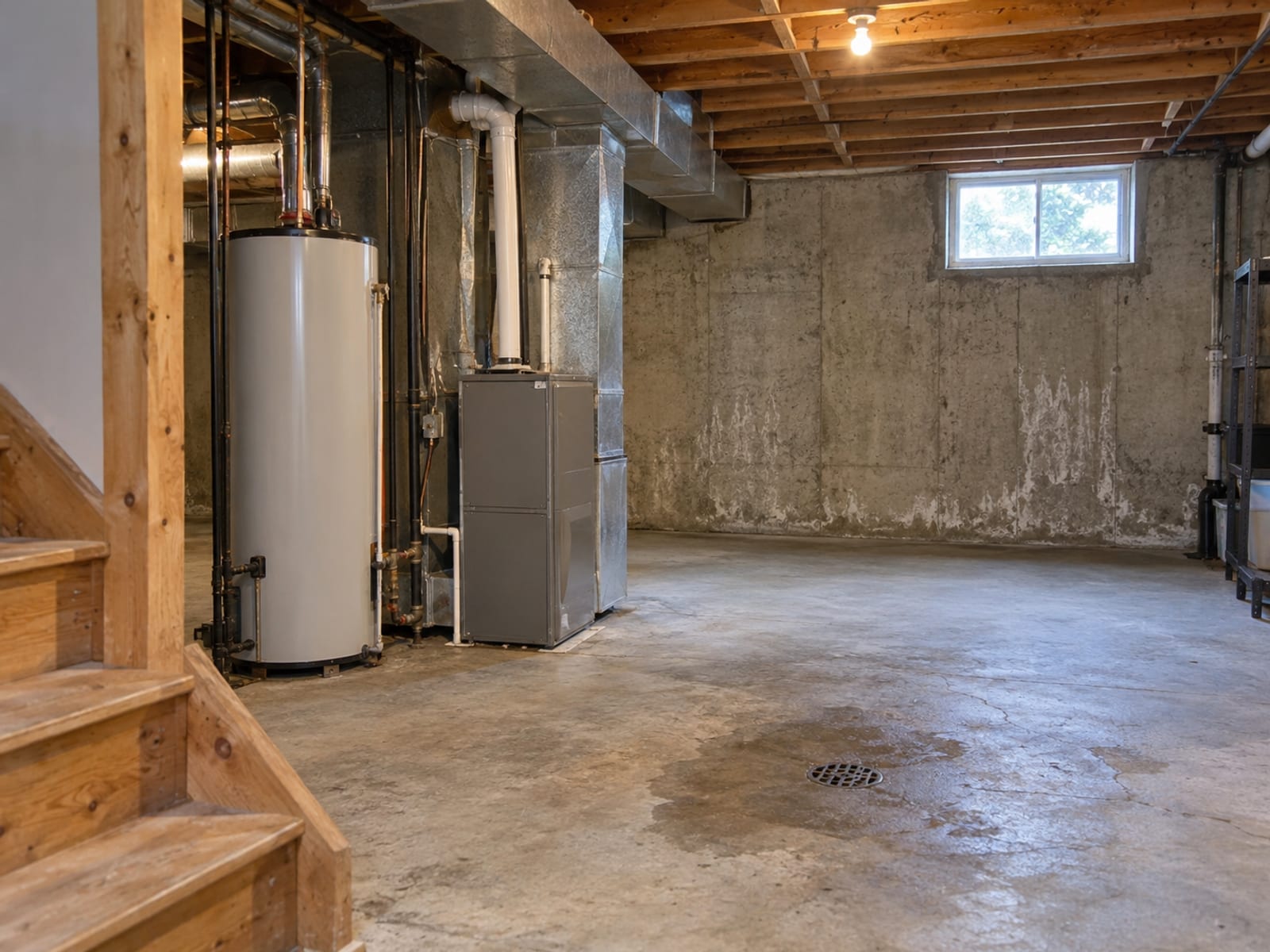
- Personal property kept in a basement.
- Landscaping, septic systems, decks, patios, fences and swimming pools outside the insured building.
- Temporary housing and additional living expenses.
- Business interruption losses.
Basements get limited coverage. Certain installed building items and contents connected to power may be covered there, subject to the policy, according to FloodSmart's claims guidance (opens in a new tab). If your home has a basement, ask for the basement limits in writing, and ask what other policy, if any, would pay for temporary housing or lost business income after a flood.
How long before flood coverage starts
A new NFIP policy generally takes effect 30 days after purchase. FloodSmart lists four exceptions (Buy a Flood Insurance Policy (opens in a new tab)):
- No waiting period when you buy flood insurance while making, increasing, extending or renewing a mortgage.
- No waiting period when you change coverage while renewing the policy.
- A one-day wait when the property is in a newly designated high-risk flood zone and you buy within 12 months of the map update.
- A one-day wait when a flood is caused or worsened by wildfire on federal land and you buy within 60 days after the fire's containment date.
The waiting period is also why a lapse matters. If a policy ends and you buy a new one, a new waiting period generally applies, and a federally backed loan on a building in an SFHA still requires the coverage each year. Renew on time, and confirm the effective date in your policy documents before you count on coverage.
What flood insurance costs in Virginia
FEMA's April 2025 Virginia state profile gives these statewide figures (Virginia Risk Rating 2.0 state profile (opens in a new tab)):
Hover or tap a row to highlight it.
| Figure | Amount |
|---|---|
| NFIP policies in force in Virginia | 104,800 |
| Virginia properties not covered by an NFIP policy | 3.0 million |
| Average NFIP claim payout in Virginia, past 10 years | $16,800 |
| Average individual assistance payout in Virginia, past 10 years | $3,900 |
The same profile shows how Risk Rating 2.0 changed Virginia premiums: 46,812 policies had immediate decreases, 50,931 had average increases of $0 to $10 a month, 5,093 had average increases of $10 to $20 a month, and 1,949 had average increases of more than $20 a month.
These are statewide figures, not a premium for a house in Virginia Beach or Norfolk. Risk Rating 2.0, which replaced the older rating method beginning in 2021, prices each property on its own flood-risk variables, including where and how the building is constructed and its replacement cost, according to FloodSmart (opens in a new tab). Two nearby houses can receive different premiums, so the only price that counts is the quote for your property.
Virginia communities with CRS discounts
Communities that join FEMA's Community Rating System (CRS) earn NFIP premium discounts for their residents based on their class. FEMA's list effective October 1, 2022 shows these Virginia examples (CRS eligible communities (opens in a new tab)):
Hover or tap a row to highlight it.
| Virginia community | CRS class | SFHA discount | Non-SFHA discount |
|---|---|---|---|
| Norfolk | 5 | 25% | 10% |
| James City County | 5 | 25% | 10% |
| Alexandria | 6 | 20% | 10% |
| Accomack County | 6 | 20% | 10% |
| Chesapeake | 7 | 15% | 5% |
| Hampton | 7 | 15% | 5% |
| Newport News | 7 | 15% | 5% |
| Portsmouth | 7 | 15% | 5% |
| Virginia Beach | 7 | 15% | 5% |
| York County | 7 | 15% | 5% |
Classes change over time, and this list is dated. Ask your agent for your community's current class and how the discount applies to your policy.
Private and excess flood insurance
Flood coverage may be available from private insurers as well as the NFIP, according to the Virginia Bureau of Insurance (opens in a new tab). NFIP policies are sold through participating insurers and agents. A private policy has its own form, limits, exclusions, waiting period, eligibility rules and claims terms, so compare those line by line, and confirm your lender will accept it before you switch.
Excess flood insurance is meant to cover losses above the limit of an underlying flood policy. Ask whether it requires an NFIP or private primary policy, whether it follows the primary policy's exclusions, and how the two policies coordinate on a claim.
How to file a flood claim in Virginia
Start the claim quickly and keep records as you go. FloodSmart lays out the sequence (Start a Claim (opens in a new tab)):
- Contact your flood insurer or agent promptly.
- Follow the instructions for emergency repairs and documentation.
- Photograph or record the damage when it is safe.
- Keep receipts and information about damaged property.
- Identify whether building coverage, contents coverage or both apply.
- Work with the assigned adjuster.
- Ask about limits, deductibles, mortgage-holder information and proof-of-loss requirements.
- If the claim is denied or disputed, discuss it with the insurer and review FEMA's appeal options.
FloodSmart also keeps a claims checklist (opens in a new tab) of the records to gather.
From a flood to a settled claim
- Report itContact your flood insurer or agent promptly and follow its instructions for emergency repairs.
- Document itPhotograph or record the damage when safe, and keep receipts and damaged-property information.
- Sort the coverageIdentify whether building coverage, contents coverage or both apply.
- Work with the adjusterAsk about limits, deductibles, mortgage-holder information and proof-of-loss requirements.
- If you disagreeDiscuss it with the insurer and review FEMA's appeal options.
How to check an agent or file a complaint
Verify the person or agency before you rely on a quote or a coverage explanation, using the Virginia insurance license lookup (opens in a new tab).
If a dispute comes up, contact the insurer or agent first. If that does not settle it, file through the Virginia SCC's insurance complaint process (opens in a new tab) and upload your supporting documents. Complaints go through the online portal, or by mail or fax on the applicable form, not by phone or email. For questions, the Bureau's Property and Casualty Consumer Services line is 804-371-9185, and its email is AskAQuestionPC@scc.virginia.gov.
Questions to ask your lender or agent
- Is the property in an SFHA on the current effective FEMA map, and which map panel and date did you use?
- Is flood insurance required for this loan, and what exactly must the policy meet?
- Does the community participate in the NFIP, and what is its current CRS class?
- What building and contents coverage is being quoted, and what are the separate deductibles?
- Which basement items are limited or excluded?
- Are temporary housing, business interruption, vehicles, decks, fences, landscaping and septic systems excluded?
- What is the policy's effective date, and does a waiting-period exception apply?
- What happens if the policy is canceled or lapses?
- Is the policy NFIP, private or excess, and will my lender accept it?
- Who handles claims, and what documents will I need?
- Does the policy pay contents at replacement cost or actual cash value, and are there special limits on high-value items?
For help choosing someone to ask, see how to choose an insurance agent.
Check what you know about Virginia flood insurance
Frequently asked questions
Can I buy flood insurance once a storm is in the forecast?
You can buy it, but a forecast storm does not generally remove the 30-day waiting period on a new NFIP policy. Coverage bought days before landfall usually will not be in force when the storm arrives, unless one of FEMA's listed exceptions applies.
Who pays when a hurricane causes both wind and flood damage?
Different insurers may handle different causes of damage, such as wind under a homeowners policy and flood under a flood policy, according to NFIP claims guidance for agents (opens in a new tab). Report the loss to both insurers and keep separate records of each kind of damage.
Will my locality tell me if a flood map changes?
When a Virginia locality receives FEMA notice of a map change affecting the SFHA, it must notify affected property owners under Virginia Code § 15.2-976 (opens in a new tab). A newly mapped high-risk property may qualify for a one-day waiting period if the policy is bought within 12 months of the update.
Does the $250,000 NFIP building limit match what my home is worth?
No. It is the maximum the NFIP pays for a residential building, not an estimate of your rebuilding cost. If your home would cost more to rebuild, ask about excess flood coverage above the NFIP limit.
Your next step
Look up the address, get the lender's determination in writing if you have a mortgage, and take the questions above to a licensed agency. Riskado's directory lists insurance agencies in Virginia by city and by category.
Terms used in this guide
Tap a term to see what it means.
Special Flood Hazard Area (SFHA). The high-risk flood area shown on FEMA's flood maps, where federally backed mortgages generally require flood insurance.
National Flood Insurance Program (NFIP). The federal flood insurance program run by FEMA and sold through participating insurers and agents.
Flood Insurance Rate Map (FIRM). FEMA's official flood map for a community, used for mandatory purchase and floodplain decisions.
Standard Flood Hazard Determination. The lender's form recording whether a building is in an SFHA and whether flood insurance is required.
Mandatory purchase rule. The federal requirement for flood insurance on qualifying federally backed loans secured by buildings in an SFHA.
Risk Rating 2.0. FEMA's pricing method, in use since 2021, that rates each property on its own flood-risk variables.
Community Rating System (CRS). A FEMA program that gives NFIP premium discounts in communities that take steps to reduce flood risk.
Excess flood insurance. Coverage for losses above the limit of an underlying flood policy.